Searching for electrical panel repair Lakeland FL? Start with what’s actually in your panel. Lakeland gives us two completely different electrical stories, sometimes on the same street. Around Lake Morton and through the Dixieland Historic District, 1920s-to-1960s bungalows are still running panels installed when the house was built — and some of those are the exact brands Florida insurers flag on sight: Federal Pacific Stab-Lok and Zinsco. Head south along S. Florida Avenue into the newer subdivisions, and the panels are younger but the loads are heavier: pools, second AC units, and EV chargers stacked on top of whatever the builder planned for. The question is the same in both cases: can what’s in your panel safely carry what your house actually runs?
Call to discuss your panel concerns — we’ll give you a firm written price before any work starts.
What Panel Problems Are Most Common in Lakeland, FL?
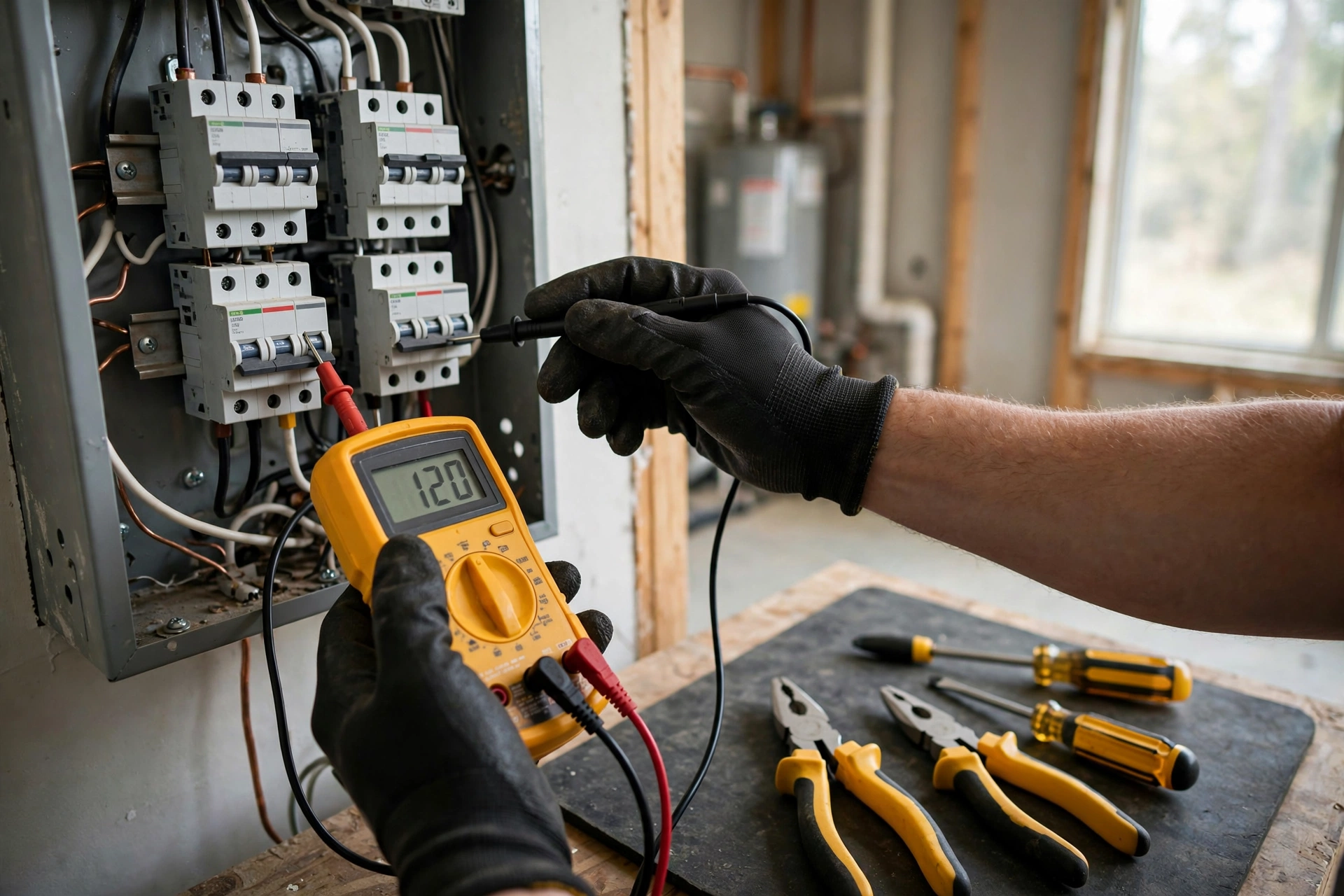
In the historic neighborhoods, age is the story. Original 60-amp and 100-amp services are still common in pre-1970 homes, and fuse boxes turn up more often here than in the newer suburbs west of town. Breakers from that era get sluggish with age — they trip under light loads or, worse, lose their ability to trip reliably. When a 4-point inspection flags the panel on a Lake Morton bungalow, it’s usually the brand or the age, not anything the homeowner did wrong.
In south and north Lakeland’s newer developments, the panels are modern but full. The pattern we see: a 150-amp or 200-amp panel with every slot taken, tandem breakers doubled up, and a homeowner wondering why the main trips when the pool pump, the dryer, and the EV charger all run at once. That isn’t a defective panel — it’s a house that outgrew its service. A load calculation sorts that out in one visit.
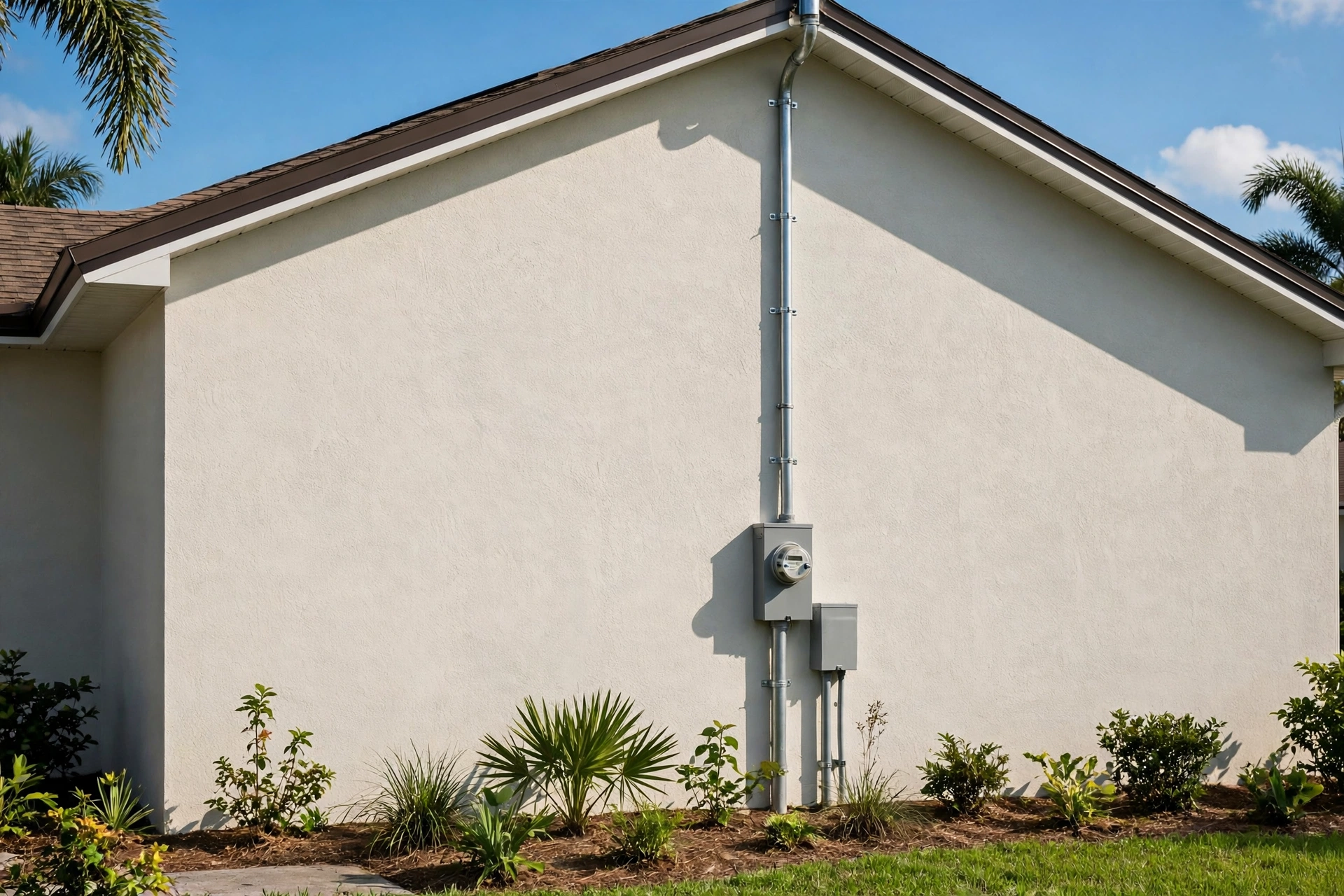
And all over Lakeland, outdoor panels take the same beating they do in Plant City: afternoon storms, months of humidity, and the wet-dry-wet cycle corrode enclosures and creep onto bus bars. Surface rust on the can is cosmetic. Rust that’s reached the breaker stabs is a replacement conversation.
- Warning signs worth a call: a breaker that trips weekly, buzzing or crackling from the panel, a panel that’s hot to the touch, any burning smell, rust reaching the breakers, or lights flickering across the whole house.
- Don’t wait on: scorch marks, a breaker that won’t stay reset, or anything that changed right after a storm.
How Much Does Panel Replacement Cost in Lakeland, FL?
The straight answer: most residential panel replacements in the Lakeland area land between $1,800 and $3,500. That’s the going range for this market — not a quote for your house. A straightforward swap on an accessible garage panel runs less; a corroded outdoor panel that needs wiring repairs and a new meter base runs more.
What moves the number:
- Amperage — 100A vs. 200A equipment and labor
- Panel location and accessibility — garage wall vs. buried behind storage
- Condition of existing wiring and grounding
- Whether the meter base or service conductors need work
- City of Lakeland permit and inspection fees
Repair vs. Replace: Which Does Your Lakeland Home Need?
This is the call that saves or costs homeowners the most money, so here’s how we draw the line:
| Repair | Replacement | |
|---|---|---|
| Goal | Fix one isolated fault | Remove unsafe or obsolete equipment |
| Best when | Single failed breaker, loose connection, modern panel under ~25 years old | Federal Pacific / Zinsco, corroded bus bar, fuse box, repeat failures |
| Panel changes? | Usually no | Yes |
| Typical range | $150–$500 | $1,800–$3,500 |
| Power off | Minutes to an hour | Most of the day |
Our rule is simple: if the panel is sound and the problem is isolated, we repair it. If the equipment itself is the hazard, we say so — even when the cheaper job would pay us today.
Does My Lakeland Home Need a 200-Amp Upgrade?
Short answer: not automatically. If your 100-amp service runs everything without tripping the main and a load calculation shows headroom, you’re fine — don’t let anyone sell you capacity you don’t need. You need the jump when you’re adding a Level 2 EV charger, a pool or hot tub, a home addition, or a workshop with 240V tools. Any one of those can push a mid-century 100-amp service past its limit.
Lakeland’s I-4 commuters are a big part of this. A Level 2 charger pulls a steady 40–60 amps for hours at a time, and on a 100-amp service already running central AC and an electric dryer, the math usually doesn’t work. The load calculation — the NEC’s prescribed method, not a guess — tells you exactly where you stand before you spend anything.
Our 4-Step Panel Process for Lakeland Homes
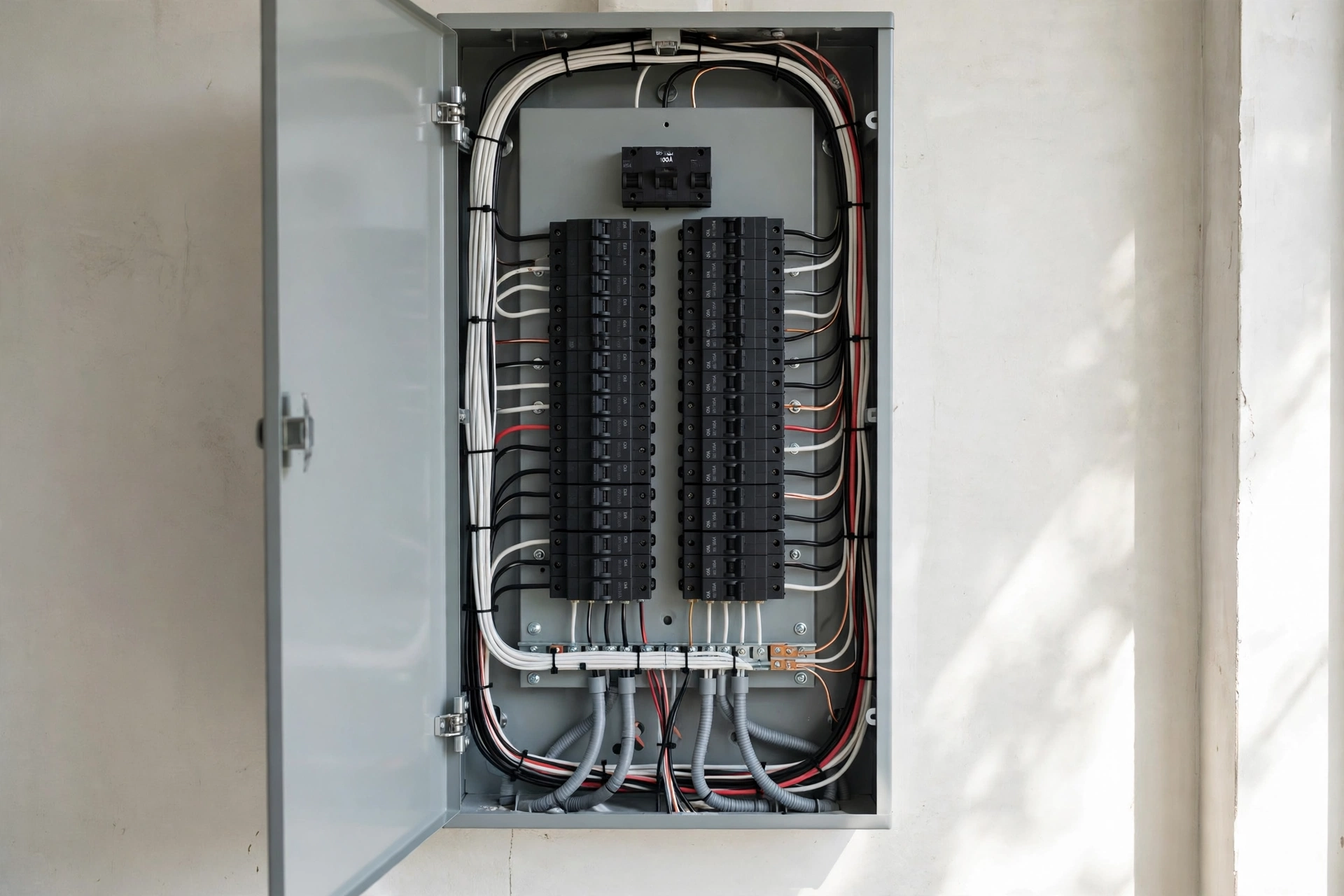
Here’s exactly what happens from your first call to the final inspection — no mystery, no surprises:
Not sure whether it’s the breaker, the panel, or the service?
You don’t need to know — that’s our job. Describe what you’re seeing and we’ll take it from there.
📞 Call (813) 471-5214Storm Season and Lakeland Panels: What Actually Matters
Hurricane season runs June through November, and Central Florida sees some of the heaviest lightning in the country. A nearby strike doesn’t have to hit your house to send a surge down the service line — every storm season brings calls from homeowners whose breakers started acting strangely right after a big storm. Tripping that wasn’t happening before, or a hot smell that wasn’t there last week, is worth having looked at rather than written off as coincidence.
The slower damage is moisture. Outdoor panels live through months of rain followed by brutal heat, and that cycle turns a sound enclosure into a rusted one over the years. If your panel is outside, it deserves a look every couple of years — catching corrosion at the enclosure stage is a far cheaper fix than catching it at the bus bar.
None of this means every panel needs surge protection or a post-storm inspection. But a panel that behaves differently after storm season shouldn’t be assumed to have fixed itself when the weather cleared. And if you’re replacing a panel anyway, a whole-home surge device at the panel is inexpensive protection for everything downstream.
Permits and the Utility: What Lakeland Homeowners Should Know
Two things work differently in Lakeland than in Plant City, and both are worth knowing up front. First, permits go through the City of Lakeland’s building division — we pull the permit and schedule the inspection as part of the job. Second, most addresses inside the city are served by Lakeland Electric, the city’s municipal utility, rather than TECO. Service upgrades and meter work get coordinated with Lakeland Electric’s schedule, and we’ll give you a realistic timeline once we’ve seen the job.
- Power is off most of installation day — usually 4–8 hours for a panel swap
- Permit and inspection handled as part of the project, not left to you
- Firm written price confirmed after the on-site assessment — never before
- Close-out paperwork provided for your records and your insurer
Every Panel Service for Lakeland Homes
Panel work breaks into separate decisions, and mixing them up is how homeowners overpay. Here’s what each one covers:
- Electrical panel repair — fixing a specific fault: a failed breaker, a loose connection, a damaged component. The rest of the panel stays put.
- Electrical panel replacement — swapping out equipment that’s damaged, corroded, obsolete, or flagged by your insurer.
- Electrical panel upgrade — bringing an older system up to modern safety and code standards, with protection the original install never had.
- Circuit breaker replacement — swapping a single failed or incompatible breaker once the cause is confirmed.
- 200-amp service upgrade — increasing the home’s total electrical capacity: meter base, conductors, and utility coordination, not just a bigger box.
- Subpanel installation — extra circuits for a garage, workshop, addition, or detached building.
Not sure which one fits? That’s the most common call we get. Start at Plant City Panel Fix — or just call and describe what you’re seeing.
Lakeland Electrical Panel FAQs
How do I know if my panel needs repair or replacement?
Repeated trips, heat, buzzing, a burning odor, or visible corrosion are all reasons to have it opened up and looked at — but none of them answer repair-versus-replace on their own. That call depends on the condition of the bus bar and breakers once the dead front comes off, not just the symptom you noticed.
Will my insurance require me to replace a Federal Pacific or Zinsco panel in Lakeland?
Very likely. Many Florida carriers decline new policies or require replacement of these panels, and 4-point inspectors flag them routinely — but each insurer sets its own rules, so check with your carrier. A documented, permitted replacement with a clean inspection report is what underwriters want to see.
How long does a panel replacement take?
The physical swap takes 4–8 hours, with power off most of the workday. The City of Lakeland permit and inspection add a few days to the overall timeline, and service upgrades add Lakeland Electric coordination — but you’re only without power on installation day.
Can I add an EV charger to my current panel?
It depends on open breaker slots and, more importantly, whether the service has room for a steady 40–60 amp load. A load calculation answers this properly. On a 100-amp service already running AC and an electric dryer, the honest answer is often “not without an upgrade.”
Do I need a permit for panel work in Lakeland?
Yes. The Florida Building Code requires a permit for panel replacements and upgrades, and the City of Lakeland inspects the work before the job is closed out. We handle the permit and scheduling as part of the project.
Why does my breaker trip when the AC kicks on?
It could be the AC unit, the circuit, the breaker, or the total load on that part of the panel at that moment. The timing narrows it down but doesn’t confirm it — which is why we diagnose by pattern and testing, not by guessing over the phone.
Is a rusty panel dangerous in Florida humidity?
Surface rust on the enclosure is worth watching. Rust or corrosion that’s reached the breakers, bus bar, or connections is a different matter and worth having checked promptly — especially on outdoor panels, which are common in Lakeland.
Still weighing repair vs. replace?
Talk it through with people who only do panels. Call to discuss your panel concerns — no pressure, just a straight answer.
📞 Call (813) 471-5214Firm written price before any work starts.
Serving Lakeland, FL — from the historic districts around Lake Morton and Dixieland to the newer subdivisions of south and north Lakeland — and the surrounding Polk County communities.