
Home / Services / Subpanel Installation
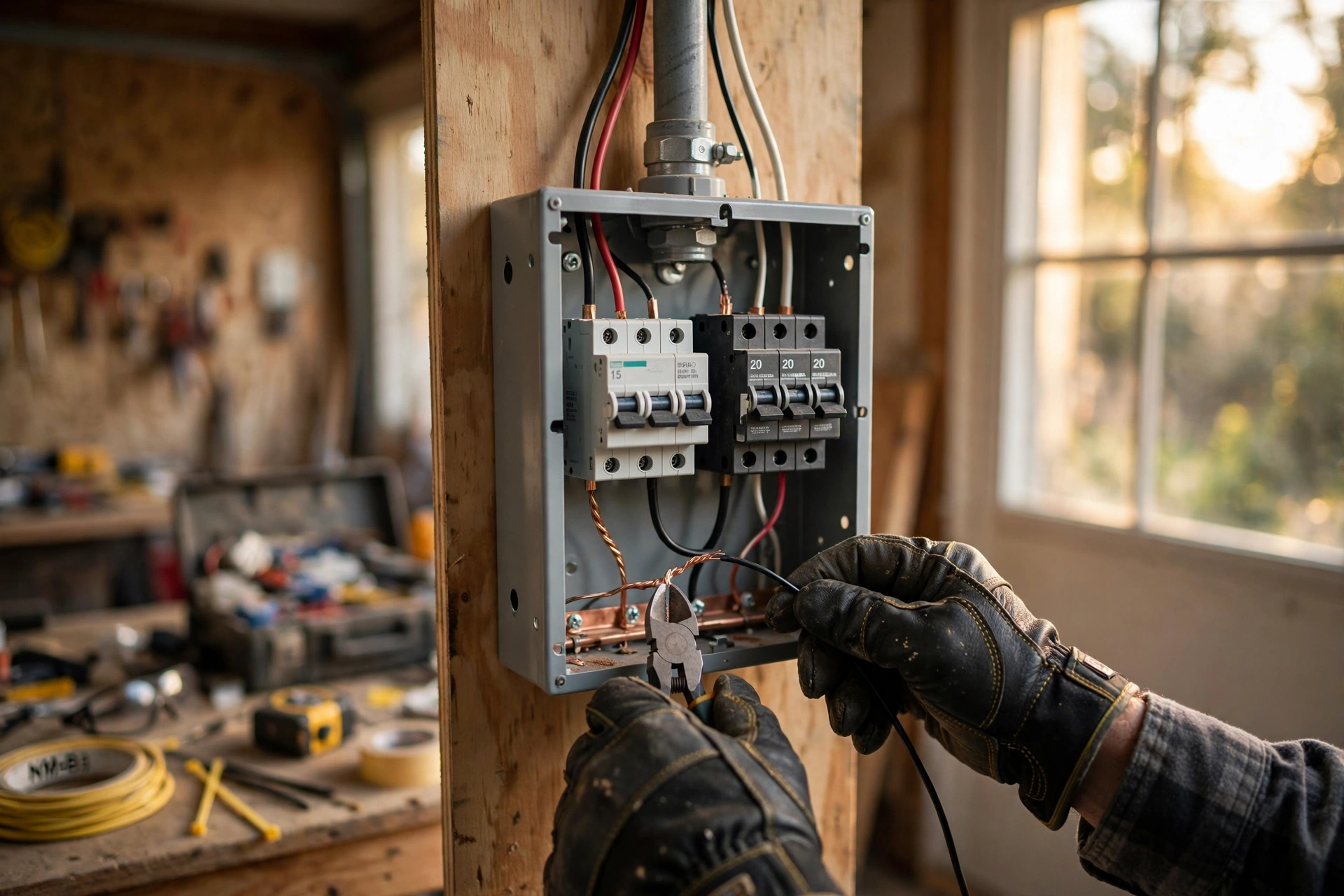
SUBPANEL INSTALLATION — PLANT CITY, FL
Subpanel Installation in Plant City, FL
Out of breaker slots? Adding a workshop, garage, or addition? A subpanel puts power where you need it — with the right feeder size, proper grounding, and a permit pulled before the work starts.
Load calculation first · Code-correct grounding · Firm written price before work starts
What Does Subpanel Installation Cost in Plant City, FL?
Typical range: most residential subpanel installations in the Plant City area fall between $700 and $2,200 for an attached garage or nearby addition — a typical market range, not a quote. Detached structures cost more, typically $1,500 to $4,500+, because of trenching, conduit, and the long feeder run. The single biggest cost driver is distance: the farther the subpanel sits from your main panel, the more heavy-gauge feeder wire and conduit the job needs. Your firm written price is confirmed before any work starts, after we’ve assessed your panel, your load, and the run.
6 Signs You Need a Subpanel
Out of breaker slots? Adding a workshop, garage, or addition? A subpanel puts power where you need it:
1. Your main panel is out of breaker slots. Tandem breakers can buy a slot or two, but once the panel is truly full, a subpanel is the clean answer.
2. You’re powering a detached garage or workshop. Code allows only one feeder to a separate structure — so a detached building with more than a circuit or two needs its own panel fed from the house.
3. A home addition or remodel added load. New kitchen circuits, a laundry relocation, or a finished space — a subpanel near the addition keeps runs short and the main panel organized.
4. High-draw equipment needs dedicated circuits. EV chargers (40–60A), pool pumps, hot tubs, welders, and large air compressors each deserve their own properly sized circuit — often easiest from a subpanel.
5. You’re tired of the long walk to reset a breaker. A subpanel in the garage or workshop means the breaker for that space is right there.
6. You want room to grow. A subpanel with spare slots is cheap insurance for the next project — solar-ready wiring, a future EV charger, or that workshop expansion.
Subpanel or Full Panel Upgrade — Which Do You Actually Need?
This is the question to get right, because the price difference is thousands:
A subpanel is the right call when: your main service amperage is adequate (typically 150–200A with headroom), the main panel is in good condition, and you need circuits in a specific area or building. A load calculation confirms the service can carry the added demand — often feeding a 60- or 100-amp subpanel.
A panel upgrade is the right call when: the main panel itself is the problem — Federal Pacific, Zinsco, or Challenger brand; widespread corrosion; breakers failing across the panel; or a 60–100A service that’s already maxed out. A subpanel can’t fix a failing main panel. If that’s your situation, you’re looking at panel replacement or 200-amp upgrades instead.
We run the load calculation first. If your service can’t safely carry a subpanel’s added load, we’ll tell you — and show you the upgrade path instead.
What a Subpanel Installation Actually Involves
1. Load calculation (NEC Article 220). We calculate your home’s actual electrical demand to confirm the service can handle the new subpanel — this is the step that separates a safe install from an overloaded service.
2. Sizing and placement. 60A for a small garage or a few circuits; 100A for a workshop, detached garage, or addition; 125A+ for heavy loads and future growth. The subpanel goes as close to the load as practical — shorter feeder runs cost less.
3. Feeder and conduit. A single heavy-gauge feeder cable runs from a dedicated breaker in the main panel to the subpanel — through attic, crawlspace, or buried conduit for detached structures.
4. Grounding done right. In a subpanel, neutral and ground stay separated (unlike the main panel), and a detached structure gets its own grounding electrode — typically a ground rod — per NEC Article 250. This is the detail DIY installs get wrong most often.
5. Permit and inspection. Panel work in Plant City requires a city permit and an inspection before close-out. We pull the permit, meet the inspector, and hand you the close-out paperwork.
Not sure if a subpanel is the answer?
Call (813) 471-5214 — we’ll run the load calculation and give you a firm number before any work starts.
Detached Garages, Workshops, and Outbuildings
A detached structure has its own rules. The National Electrical Code allows only a single feeder to a separate building — so if your garage needs more than one circuit, that feeder terminates in a subpanel inside the garage. The subpanel needs its own disconnect, separated neutrals and grounds, and a grounding electrode at the building. Trenching depth, conduit type, and burial requirements all matter — underground feeder to a detached garage is one of the most commonly botched DIY electrical projects, and inspectors know exactly what to look for.
Plant City Factors That Affect Subpanel Jobs
Rural properties around Trapnell and Turkey Creek often have the perfect subpanel use case: a detached workshop, barn, or well pump sitting far from the house — which also means the longest, priciest feeder runs. In subdivisions like Walden Lake and Country Hills, the common trigger is a garage workshop or an EV charger with a main panel that’s out of slots. And Florida’s afternoon storms are unkind to exterior-mounted subpanels — proper weatherproof enclosures and corrosion-resistant hardware aren’t optional here.
Subpanel Installation FAQs
How much does it cost to install a subpanel in Plant City, FL? Typically $700–$2,200 for an attached location; $1,500–$4,500+ for a detached structure with trenching. Distance from the main panel is the biggest variable. Your exact written price is confirmed after we assess your panel and the run.
Will a subpanel increase my home’s total electrical capacity? No — a subpanel redistributes your existing service; it doesn’t add amperage. If your main service is maxed out, you need a service upgrade, not a subpanel. The load calculation tells us which.
What size subpanel do I need? 60A covers a small garage or a few circuits; 100A is the sweet spot for workshops and detached garages; 125A+ for heavy equipment and future growth. We size from your actual planned loads, not guesswork.
Do I need a permit for a subpanel in Plant City? Yes. The Florida Building Code requires a permit for subpanel installation, and the City of Plant City inspects the work before close-out. We handle the permit and inspection scheduling as part of the job.
Can I run power to my detached shed with just an extension cord or a single circuit? A single circuit is fine for a light and an outlet. Anything more — tools, chargers, climate control — and code requires a feeder to a subpanel with proper grounding. Extension cords as permanent wiring are a fire hazard and a code violation.
How long does subpanel installation take? Most attached subpanels: a day. Detached structures with trenching: two to three days including the inspection. You’ll have power throughout except for brief shutoffs while we tie in the feeder.
Serving Plant City and Surrounding Hillsborough County
We serve Plant City and surrounding Hillsborough County — Historic Downtown, Walden Lake, Magnolia Green, Varrea, Park Place, Country Hills, Trapnell, Turkey Creek.
Need power where your panel can’t reach? Let’s size it right.
Call (813) 471-5214 — load calculation first, firm written price, permit and inspection handled.
Panel Replacement · Panel Repair · 200-Amp Upgrade · Circuit Breaker Replacement · Services · FAQ · Contact